Learner-centred, by design
A clear understanding of what students are expected to learn — so teachers and parents know exactly what they need to do to help them. From the Montessori environment to the ICSE board, one research-based program that meets every child where they are.
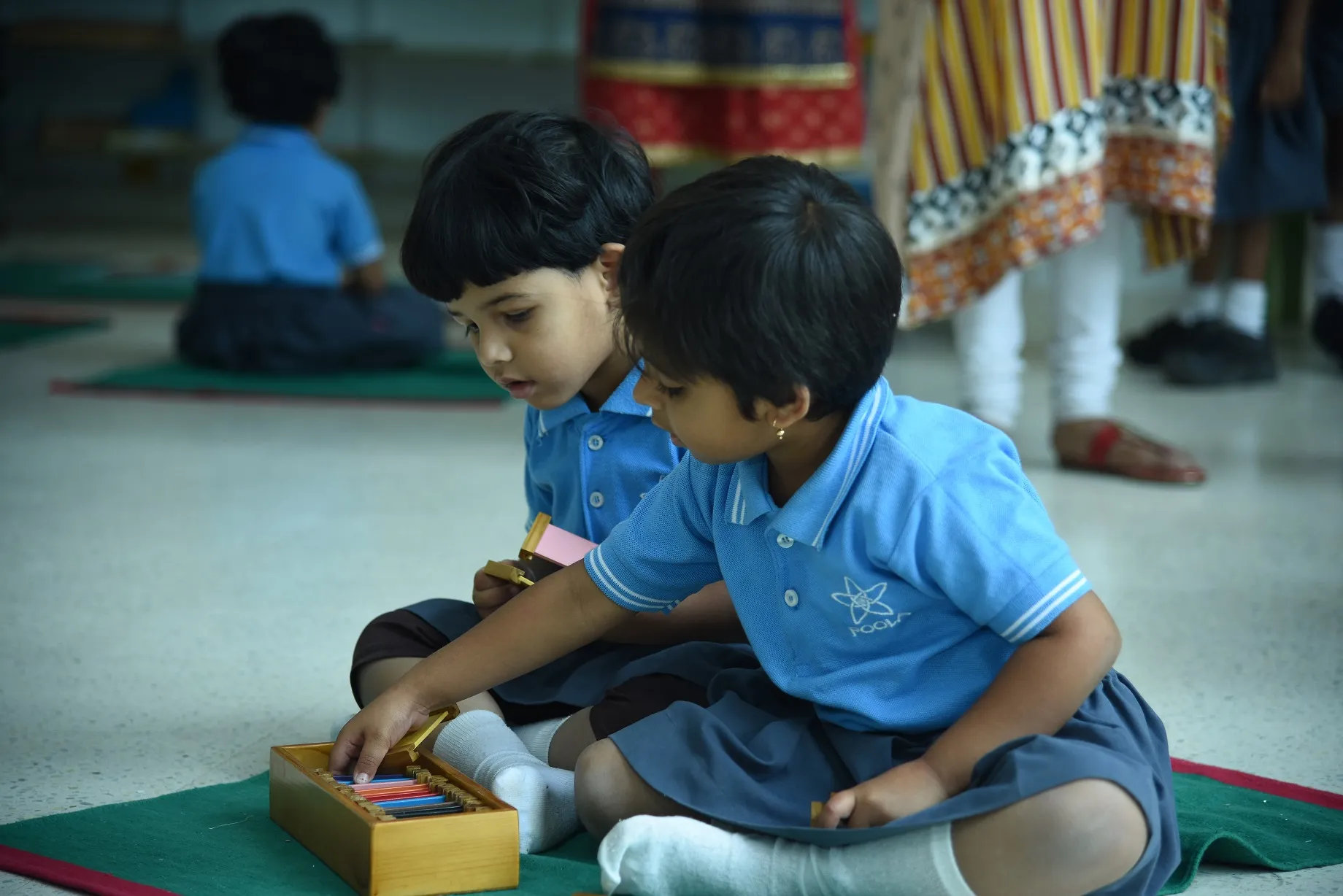
From the first mat to the final board
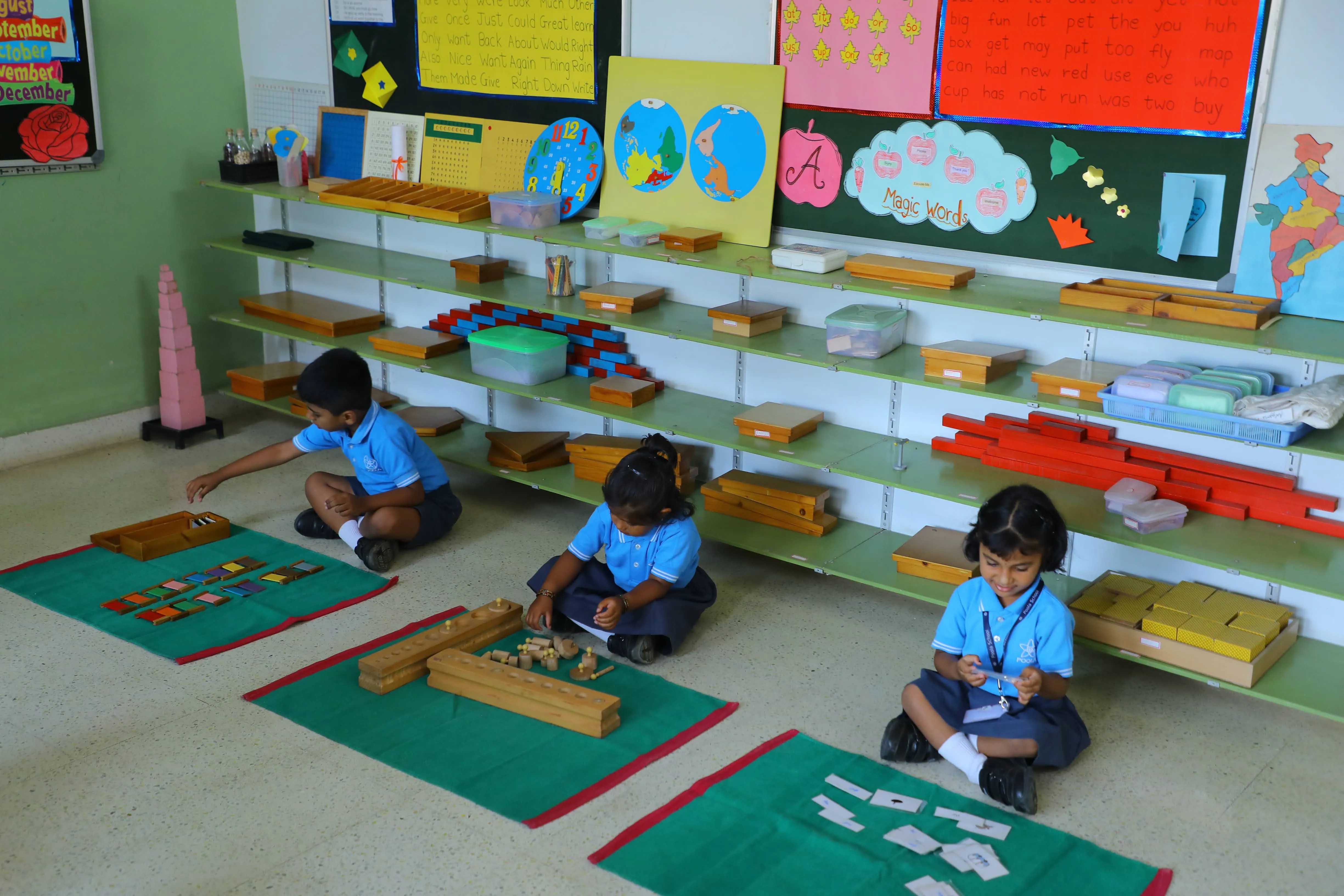
Montessori
We incorporate the Montessori philosophy of education — children learning from self-experience while the teacher guides rather than tutors. A prepared environment offers freedom with discipline; materials refine the senses and are self-corrective; mixed age groups cultivate helping, observing and self-esteem; and individual lessons come in small steps through activities the child chooses. Montessori is integrated with our structured curriculum, so children transition smoothly into the national curriculum as they grow.
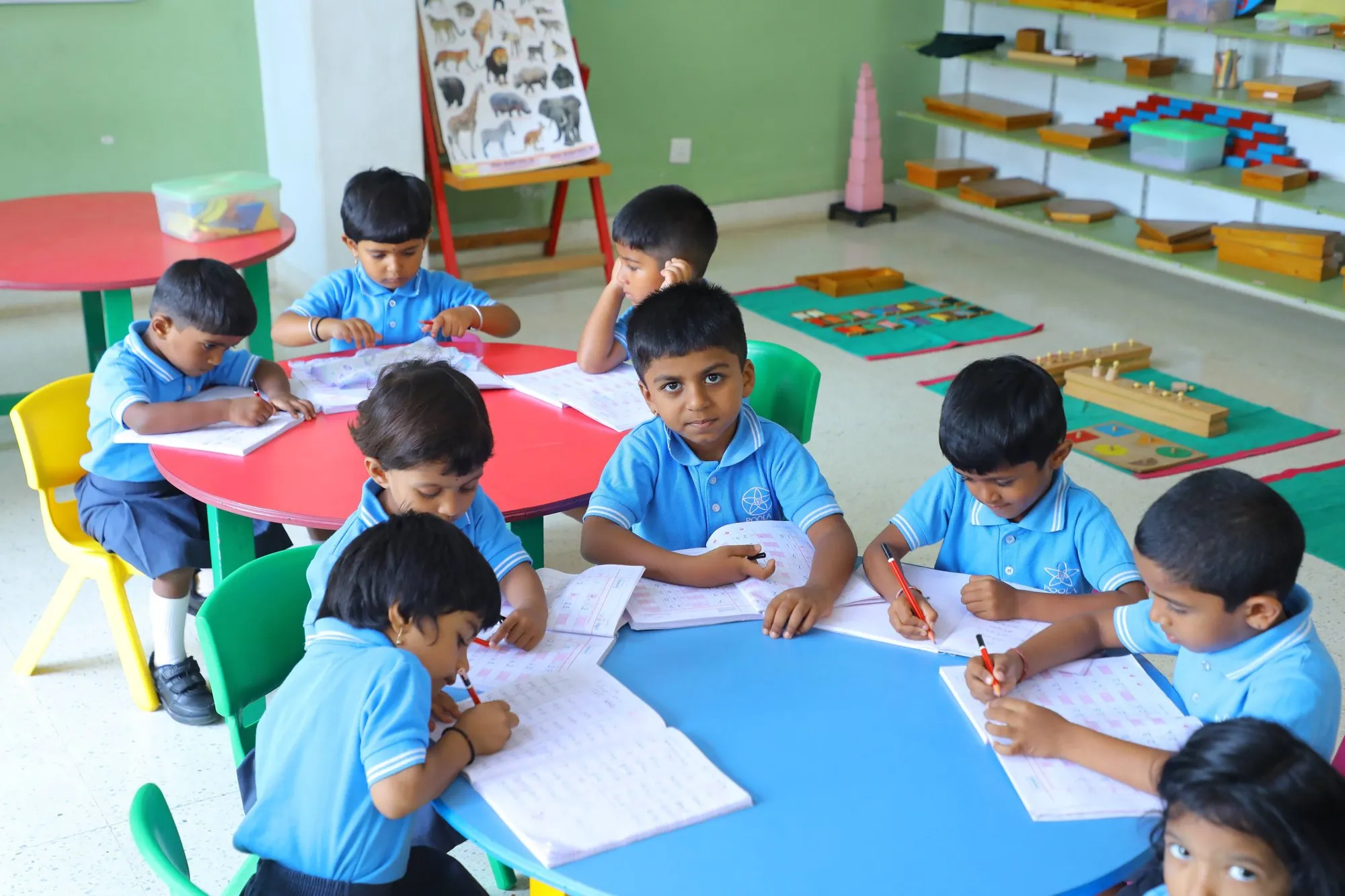
Elementary School
Elementary continues to build on the early-childhood foundation in mathematics, reading, writing and social skills, and introduces a second language, arts, music and science. Higher grades add social studies, a third language and technology. We emphasize a strong base in math, reasoning, reading, writing and physical skills, while promoting creative thinking.
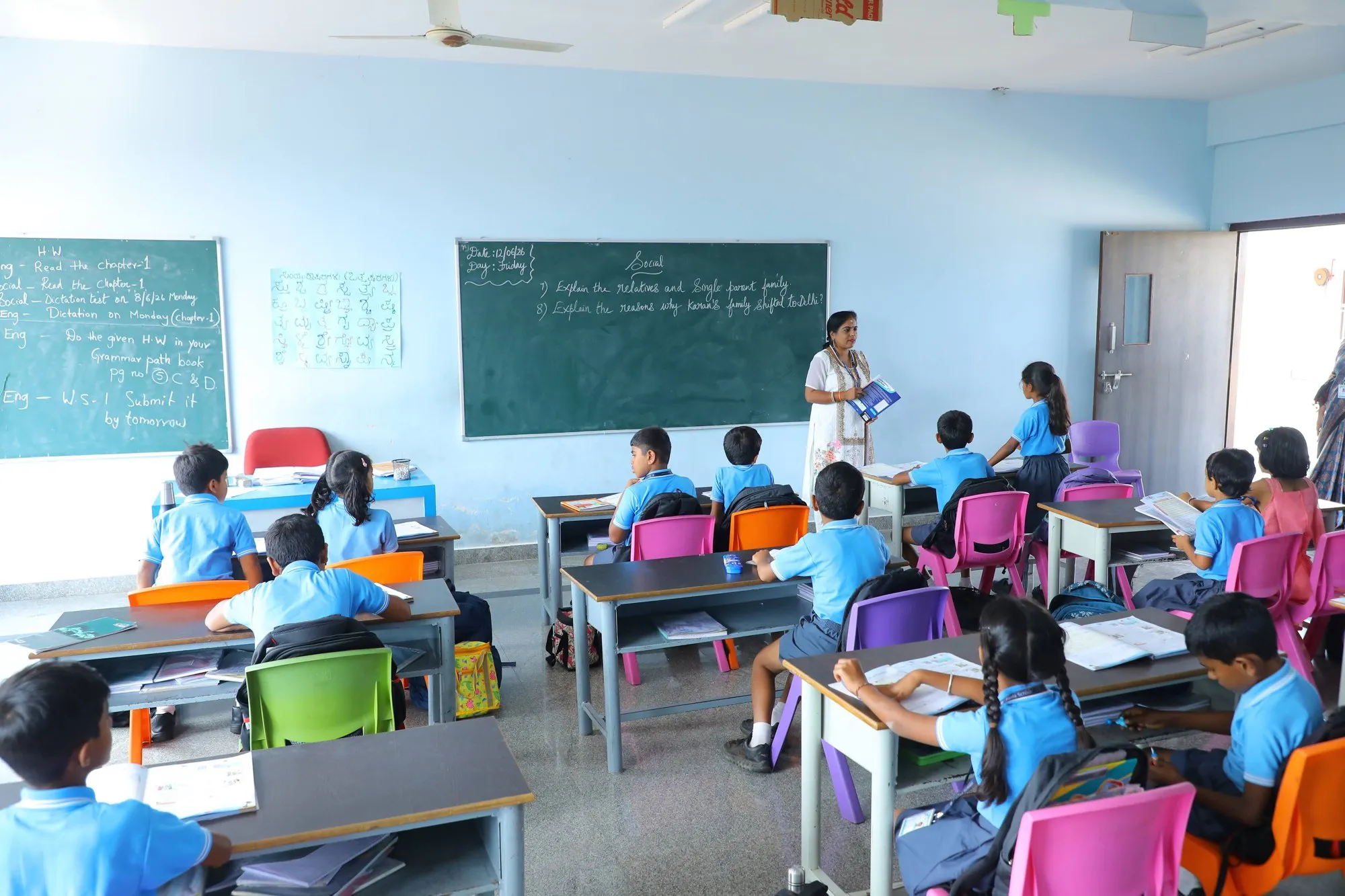
Middle School
Science becomes three separate subjects — Physics, Chemistry and Biology — preparing children for secondary school, while Social Studies expands into History-Civics and Geography. Subjects include Mathematics, Computer Studies, English (Language & Literature), Arts, Kannada and a third language.
High School
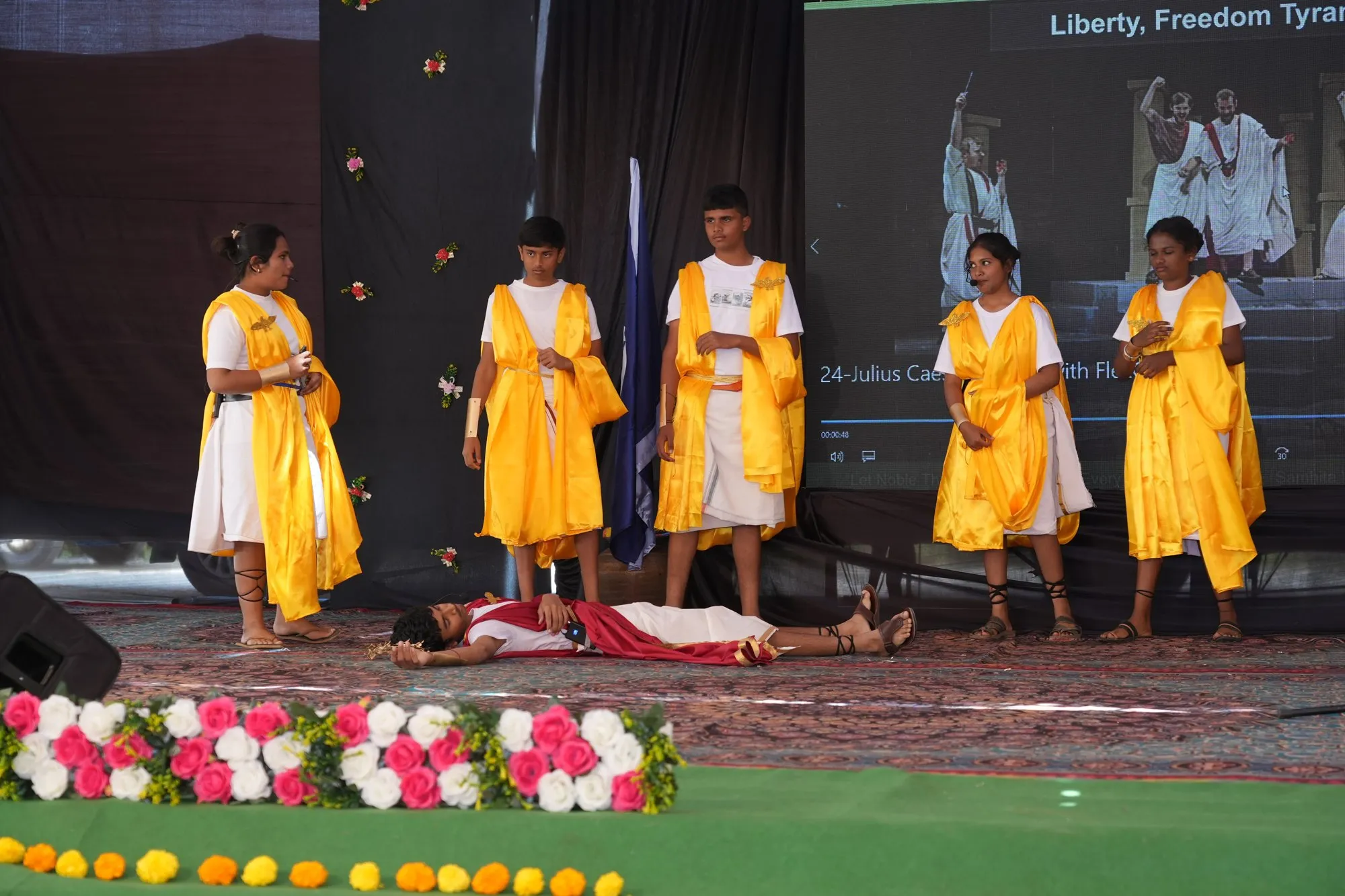
High School builds on the skills acquired in middle school and prepares students for their board examinations — while encouraging leadership roles and continued participation in sports, robotics and debate. Main subjects: Mathematics, Computer Studies, English (Language & Literature), Physics, Chemistry, Biology, History-Civics, Geography, Arts, Kannada and a third language.
Learning outcomes, subject by subject — published in the open.
“When the cook tastes the soup, that’s formative assessment; when the customer tastes the soup, that’s summative assessment.”
Paul Black · School of Education, King’s College London
Assessment for learning
Formative assessment gives feedback on learning while it happens — measuring the student’s progress and the teacher’s effectiveness. It happens through questions and observation in class, corrected homework and projects, and short tests after every chapter or two.
Report cards without rankings
For classes 1–8, report cards show progress against each subject’s detailed rubrics (learning outcomes) through grades — test marks are typically not shown, encouraging students and parents to examine how learning is progressing rather than compare with other children. Summative, term-end examinations then measure readiness for the next unit and the next class.
Where the rest of the child goes to school
Robotics
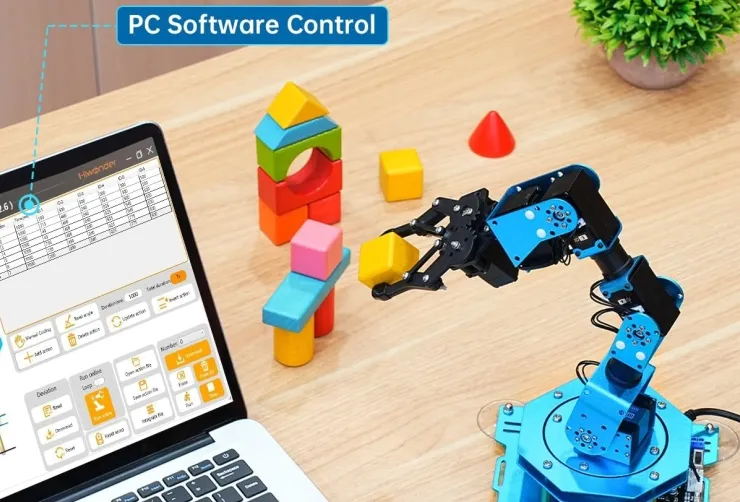
Not a separate subject — the application of Computer Studies, Science and Mathematics, where students see the principles at work. Robotics and AI will shape our students’ world; we prepare them to understand it and innovate in it.
In student life →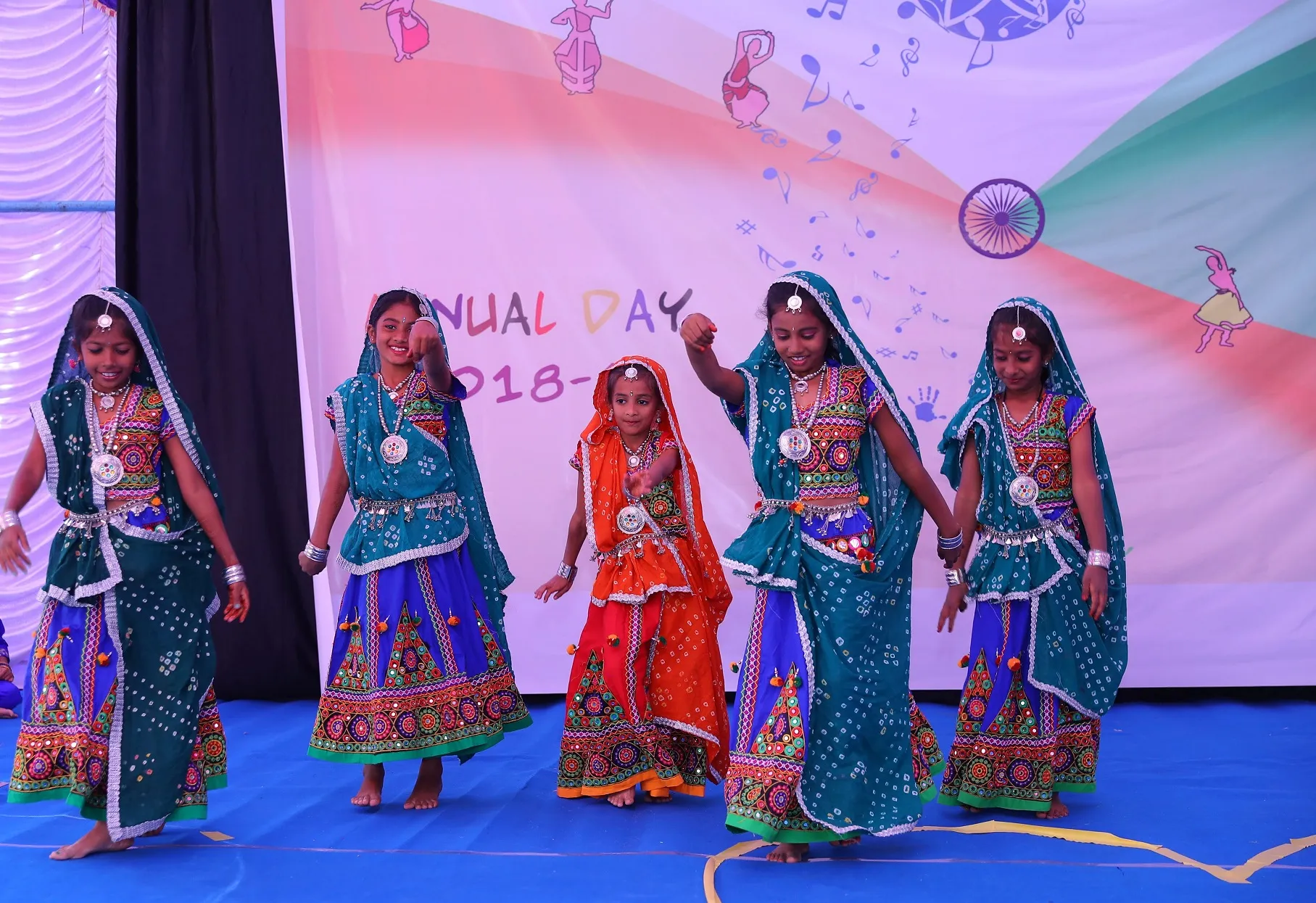
Arts & Music
Every child through the middle years takes part in art and music classes, irrespective of artistic skill or inclination — with a dedicated music room, art court and open-air theatre in the campus plan.
In student life →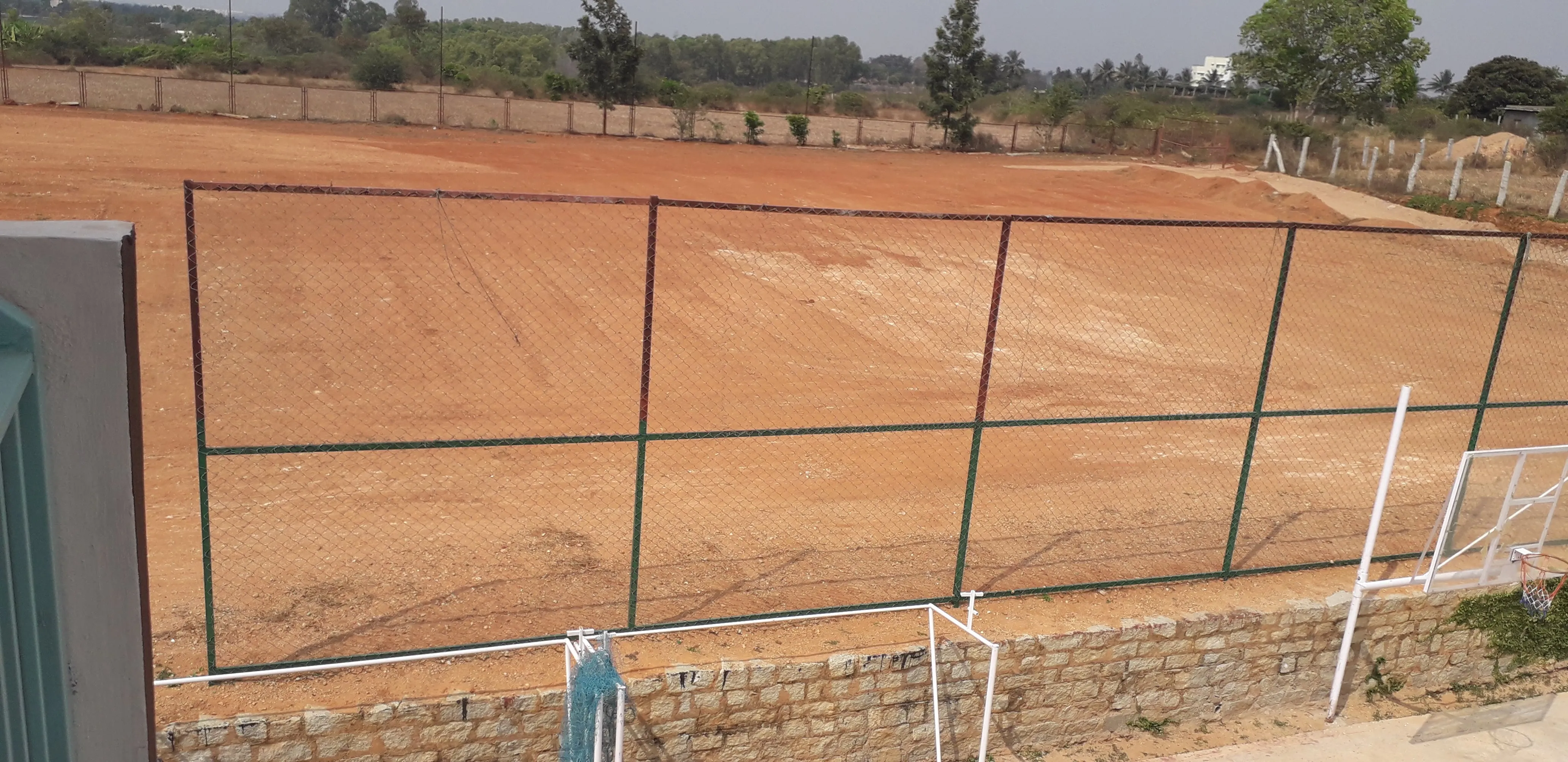
Sports
A full-fledged 90m × 45m soccer field, basketball court, indoor badminton and outdoor volleyball — with a trained instructor, and physical education that builds a healthy lifestyle while having fun.
In student life →
Student Clubs
Every student is encouraged to join clubs that interest them: Art, Garden & Environment, Chess, Debate, Science and Book clubs, indoor and outdoor.
In student life →