Committed to excellence in education
Poola School is a private unaided institution in North Bangalore, on Madhure Temple Road near Rajanukunte, overlooking a scenic valley to the west. We provide a warm, friendly atmosphere that is safe and secure for all — attracting the best teachers, keeping class sizes small, understanding every child's ability and environment, and involving parents and the community in a comprehensive, cohesive curriculum.
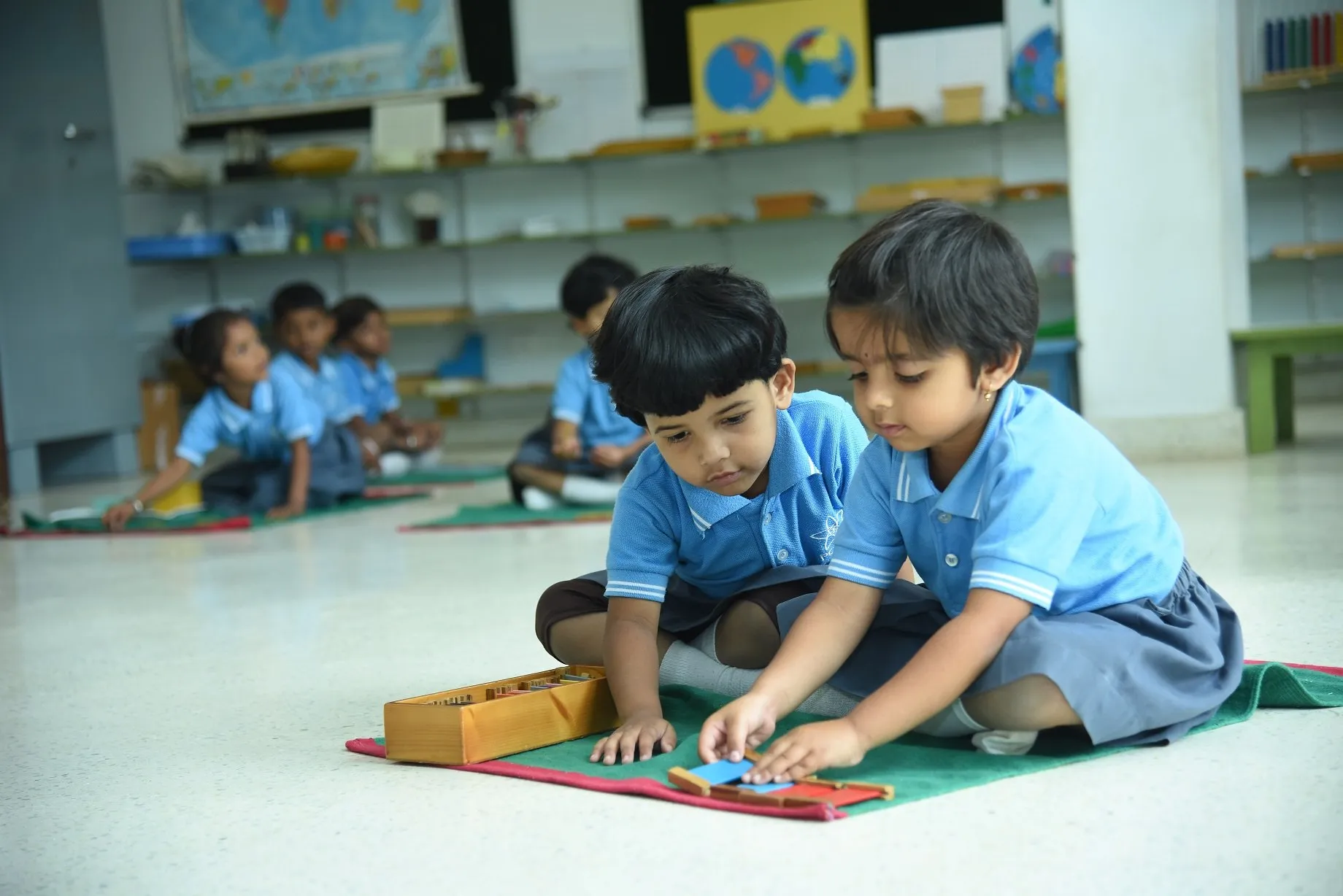
“Let noble thoughts come from every direction.”
आ नो भद्राः क्रतवो यन्तु विश्वतः
ā no bhadrāḥ kratavo kṣyantu viśvataḥ — may noble thoughts come to us from every quarter, unchanged, unhindered, undefeated in every way.
Rig Veda Samhitha 1.89.1
“To provide a safe and nurturing environment that fosters intellectual, creative and athletic excellence in children and help them be confident, productive, responsible and successful members of their family, community and society.”
Dr. Amarnath Poola · Founder Chairman
We believe…
- ✳An open mind and continuous learning — enshrined in our school emblem — should be a way of life.
- ✳A diverse environment, not just culturally but in thought, experience and ideas, fosters creativity and excellence.
- ✳Everyone can achieve their full potential.
- ✳Everyone is entitled to a safe and healthy environment.
- ✳Mutual respect — regardless of age, beliefs, status, background or achievement.
Our approach to learning…
- ✳A multifaceted, comprehensive and cohesive program that enables every student to succeed in school and society.
- ✳Not “a” system of learning, but a research-based approach constantly removing barriers to learning and development.
- ✳Understanding each individual’s ability, disability and environment to maximize their potential.
- ✳Resources, tools and methodologies that help students overcome learning disabilities.
- ✳Parents, teachers and the community involved in the education process — learning continues at home.
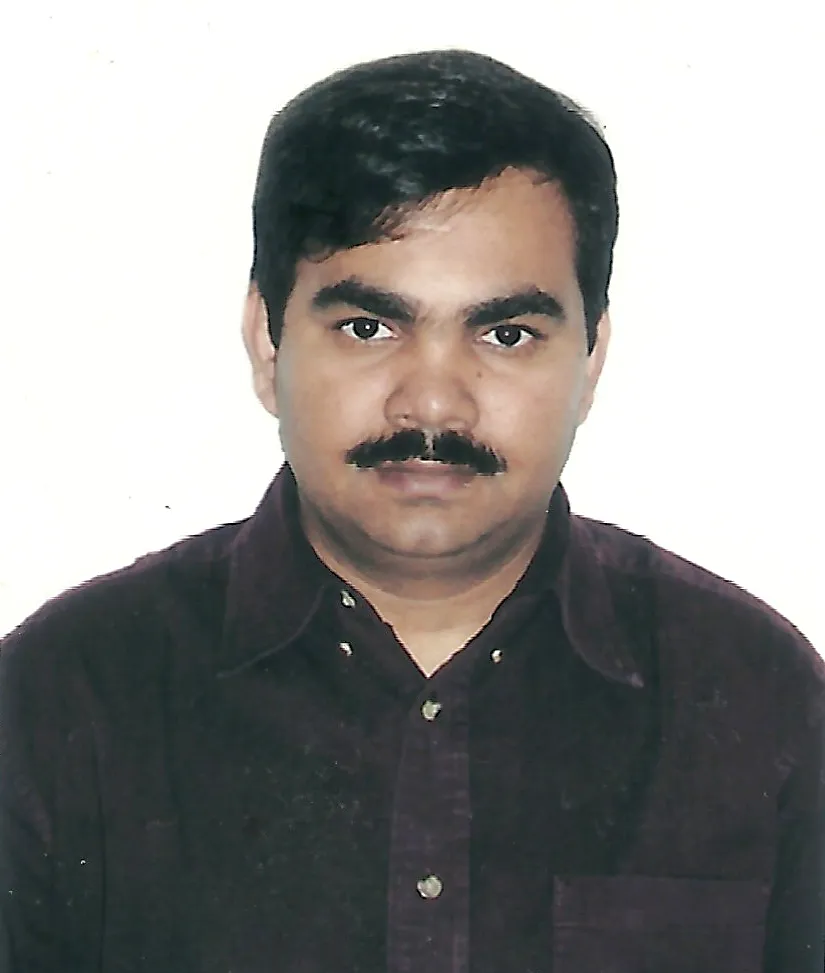
Dr. Amarnath Poola
Founder Chairman · PRAEF
PhD & MSc, Industrial and Manufacturing Engineering, Kansas State University
BE, Industrial Engineering, BMS College of Engineering, Bangalore
Education is how a democracy raises itself
Writing in Education in India: A Path Forward — published in English and, in Kannada, in the Prajavani daily — Dr. Poola argues that education is far more than the transfer of knowledge. Its real work is to develop “confident, productive, responsible and happy” citizens — the people a functioning democracy is made of.
Poola School is that argument, built. Six principles from his writing shape the school:
A formal framework
A curriculum that balances each student’s individual needs with structured development — not just what to teach, but how to teach it and how to know it was learned.
Effective implementation
Teachers work the way good doctors do: diagnose how each child learns — visually, verbally, logically, socially — and adapt the teaching to fit.
A culture of safety
Mental and physical safety, institutionalized. Bullying is prevented, not punished after the fact; discipline begins with understanding.
Family engagement
Children perform better when parents are involved regularly — so the school and the home learn to work as one.
Universal values
Mutual respect, open-mindedness, belief in every child’s potential, and a genuine appreciation of difference.
The physical environment
A well-designed, accessible campus is not a luxury — it is part of how children feel safe, settled and ready to learn.
Excellence, nurtured in each and every one
“As a parent, a teacher or a concerned citizen, preparing our children for what life throws at them is our main concern. In this school we prepare the children by providing a learning environment that nurtures excellence in each and every one of them. Keeping in mind that every child is different, we have developed a curriculum that is open-minded while at the same time being structured and rigorous. Our program is research-based and constantly evolving, incorporating best practices from around the world.
Ages 5–10 are the time to lay a solid foundation in the basic skills — reading, writing, listening, speaking and logical thinking. We continue building these skills as the child grows, with experiential learning to develop independent thinking and group activities to develop social skills. Music, art and sports are not extracurricular in our program — they are a must for every child’s overall development.
I call upon all parents, teachers and concerned citizens to join hands in creating an environment that fosters excellence in children.”
Banurekha P A · Principal
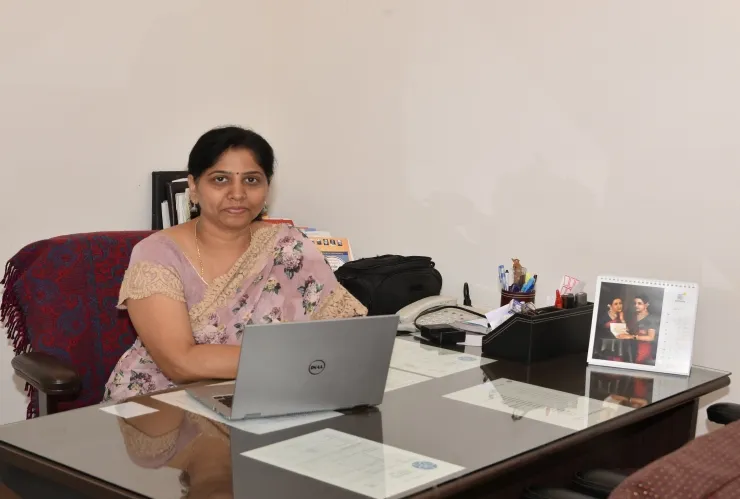
Banurekha P A
Principal
MSc, Psychology
Montessori Diploma, IMTC Bangalore
BSc, Chemistry, Anna University
Drawn before it was built
Before the first brick, there was a pencil. In 2011, the school was imagined on paper — courtyards sketched, light studied, classrooms annotated (“clerestory light at classroom wall”). Drag the line to see the street-view drawing become the school that stands today.
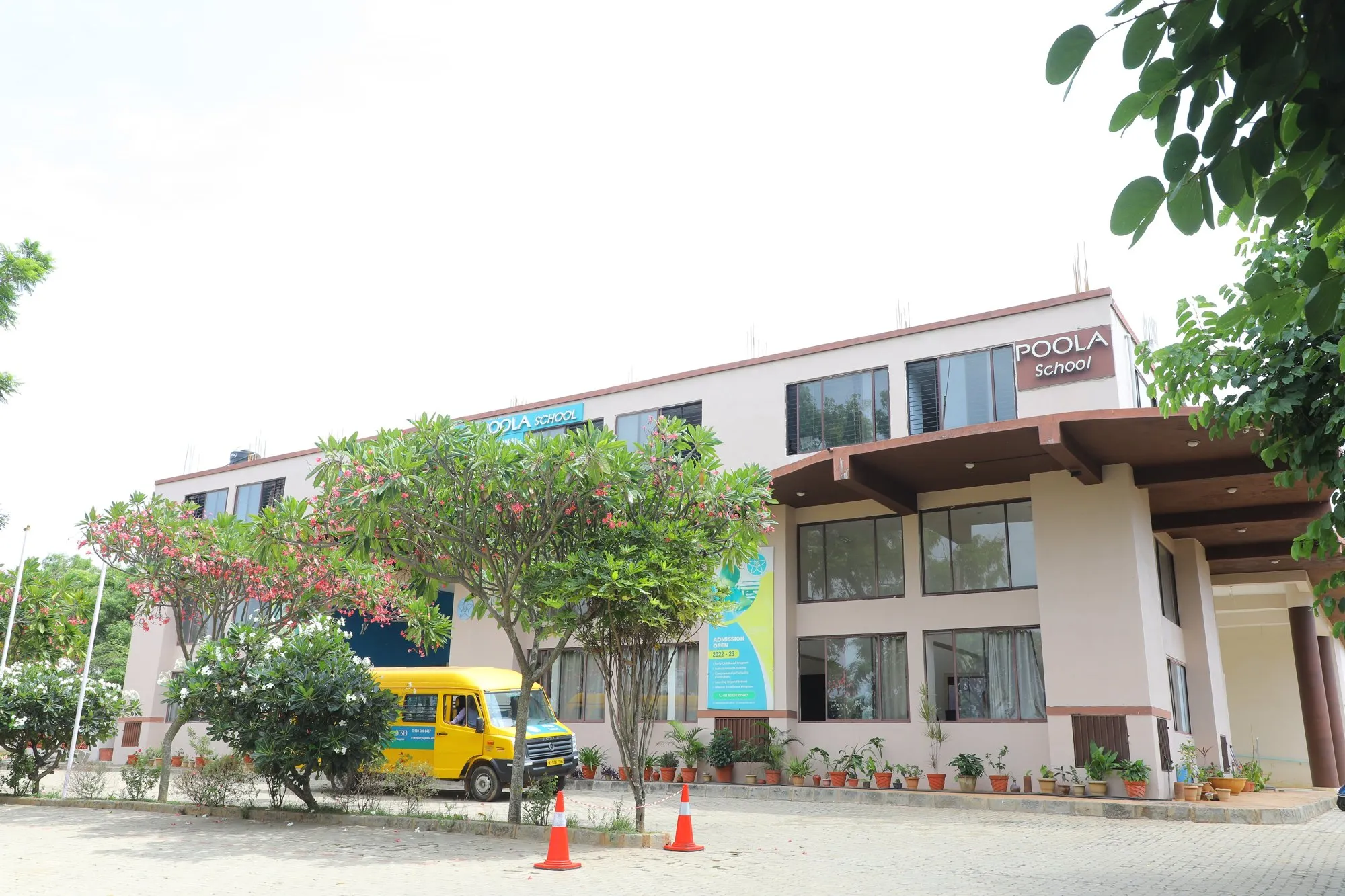
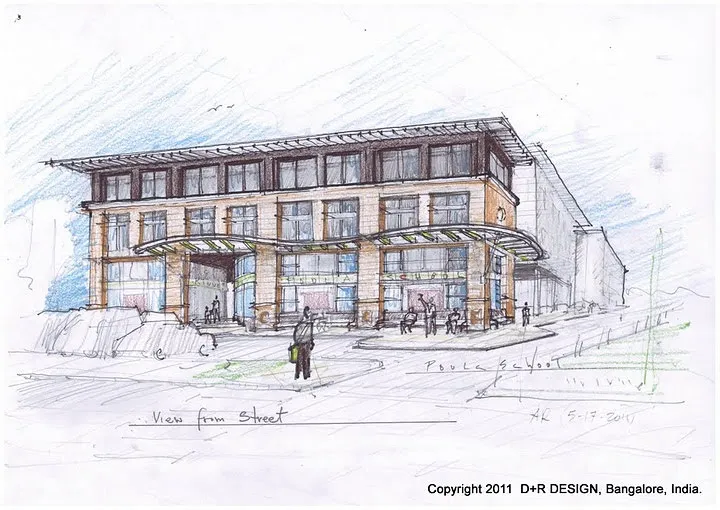
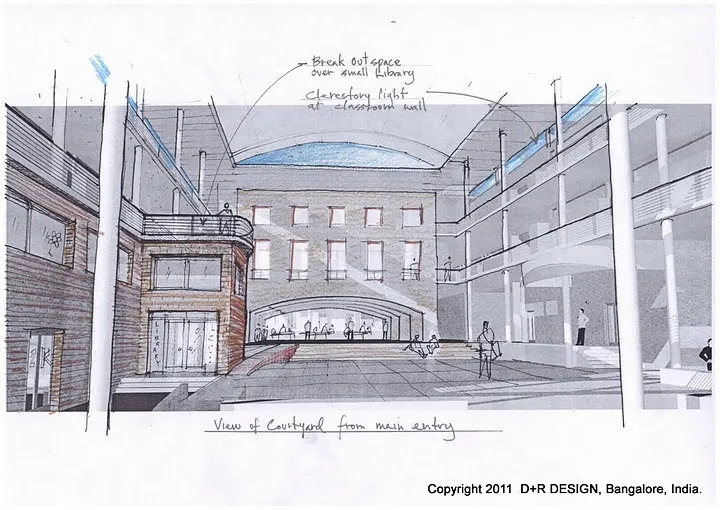
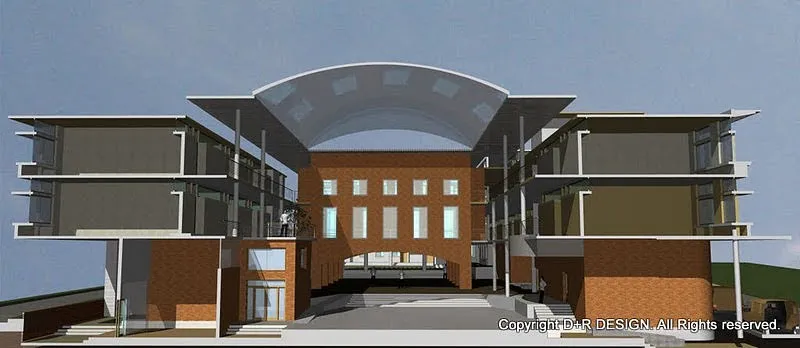
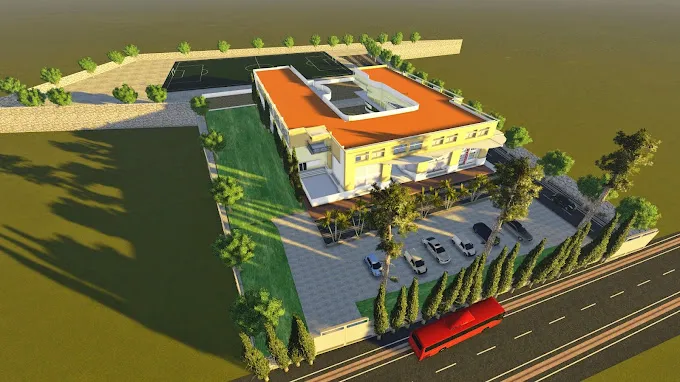
Architectural drawings & studies: D+R Design, Bangalore, 2011.
Finding one’s Best Self
The five petals represent the five senses — sight, hearing, touch, smell and taste — both physical and cognitive. Through them we become aware of our environment, and of our Self. The continuous loop around the petals, without beginning or end, is learning as a continuous process.
At the centre, three concentric circles: consciousness looking outward, consciousness looking inward, and the unconscious. The empty space at the very centre is the state of epiphany — a peaceful state past judgment, the abyss of wisdom. The emblem is the whole philosophy in one mark: finding one’s Best Self through continuous learning and an open mind.

“No person shall be excluded from participation in, be denied the benefits of, or be subjected to discrimination in any educational program or activity available in any school on the basis of race, color, sex, religion, creed, political belief, age, national origin, linguistic and language differences, sexual orientation, gender identity, gender expression, socioeconomic status, height, weight, marital or familial status, or disability.”